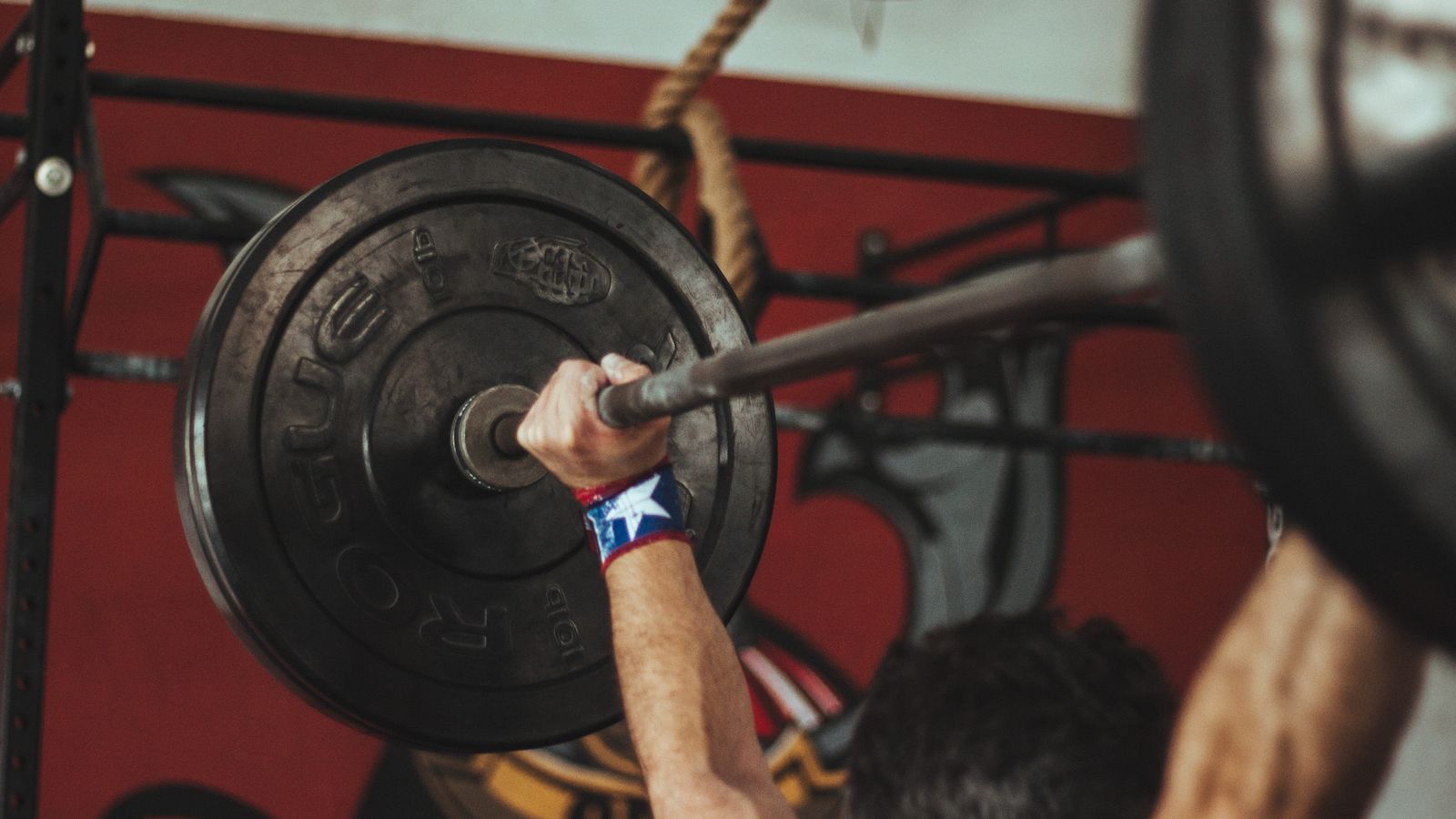
Strength training does more than make muscles look bigger. It teaches your nervous system to produce force more effectively, increases the capacity of muscle tissue, and improves physical qualities such as balance, power and everyday function.
The most important lesson for a beginner is simple: your body adapts to repeated, manageable training—not to one exhausting workout.
Strength Is Partly a Skill
Early strength gains are not caused only by larger muscles. Your brain, spinal cord and motor units become better at coordinating a movement and recruiting muscle fibers.
In a four-week strength-training study, researchers observed changes in motor-unit recruitment and firing rates alongside increased force production. Because the study examined a specific muscle and training method, it should not be treated as proof that every exercise adapts identically. It does, however, illustrate why beginners can become noticeably stronger before seeing major changes in muscle size.
This is also why consistent technique matters. Practicing a squat, press or row several times allows your nervous system to become more efficient at that particular movement.
How Muscle Growth Happens
Resistance exercise creates mechanical tension and temporarily increases the processes involved in muscle protein remodeling. When training, nutrition and recovery are repeated over time, muscle proteins can accumulate and muscle fibers can grow.
That does not mean muscle soreness or damage is the goal. Research by Damas and colleagues found that early increases in muscle protein synthesis in untrained people partly reflected repair of exercise-induced damage. The relationship with hypertrophy became clearer after the initial damage response decreased.
In practical terms, a workout does not need to leave you unable to move for three days to be effective. Controlled repetitions, adequate effort and gradual progression are better long-term targets than extreme soreness.
The Main Adaptations
Regular resistance training can improve:
- Strength: your ability to produce force.
- Hypertrophy: an increase in muscle size.
- Muscular endurance: the ability to repeat or sustain contractions.
- Power: producing force quickly.
- Balance and physical function: qualities that support sport and daily life.
- Movement confidence: improved control when lifting, carrying, climbing or changing direction.
The 2026 American College of Sports Medicine position stand found that many different resistance-training approaches improve strength and hypertrophy compared with no training. It also concluded that consistency matters more for most people than finding a supposedly perfect program.
A Practical 3-Day Beginner Schedule
Train on three nonconsecutive days, such as Monday, Wednesday and Friday. Start each session with five to eight minutes of easy movement, followed by one or two lighter practice sets for the first major exercise.
Choose versions of each exercise that you can perform with stable, pain-free technique.
Day 1
| Exercise | Sets × Repetitions |
|---|---|
| Goblet squat or leg press | 2 × 8–12 |
| Dumbbell bench press or incline push-up | 2 × 8–12 |
| Seated cable row or band row | 2 × 8–12 |
| Dumbbell Romanian deadlift | 2 × 8–10 |
| Dead bug | 2 × 6–10 per side |
Day 2
| Exercise | Sets × Repetitions |
|---|---|
| Split squat or supported reverse lunge | 2 × 8–10 per side |
| Lat pulldown or assisted pull-up | 2 × 8–12 |
| Seated dumbbell overhead press | 2 × 8–12 |
| Hip thrust or glute bridge | 2 × 10–12 |
| Farmer carry | 3 × 20–40 metres |
Day 3
| Exercise | Sets × Repetitions |
|---|---|
| Kettlebell or trap-bar deadlift from an elevated start | 2 × 6–8 |
| Step-up | 2 × 8–10 per side |
| Machine chest press or push-up | 2 × 8–12 |
| Chest-supported row | 2 × 8–12 |
| Pallof press | 2 × 8–12 per side |
Rest approximately one to two minutes between most sets. Take two to three minutes after demanding exercises if needed to maintain good technique.
How Hard Should Each Set Feel?
For the first month, finish most sets with approximately two or three good repetitions still available. This is commonly described as two to three “repetitions in reserve.”
You do not need to reach complete muscular failure. The current ACSM review found that training to momentary failure did not consistently improve outcomes. Stopping slightly short of failure also makes it easier for a beginner to preserve technique and recover for the next session.
How to Progress
Use a simple double-progression system:
- Select a load you can control for the bottom of the repetition range.
- Gradually add repetitions while maintaining the same technique.
- Once you reach the top of the range on every set for two sessions, add a small amount of weight.
- Return to the lower end of the repetition range and repeat.
For dumbbells and machines, an increase of roughly 2–5% is usually enough. If the next available weight is a large jump, add repetitions more slowly or use an additional set before increasing the load.
Record the exercise, weight, repetitions and how difficult the final set felt. A basic training log is more useful than relying on memory.
What Results Should You Expect?
Strength can improve within the first several weeks because technique and neural coordination respond relatively quickly. Visible muscle growth generally takes longer and varies with training history, genetics, nutrition, sleep and total training volume.
The World Health Organization recommends muscle-strengthening activity involving major muscle groups on at least two days per week. A three-day full-body plan satisfies that frequency while giving beginners regular practice without requiring daily lifting.
Judge progress over months, not individual workouts. More repetitions with the same weight, better control, a greater range of motion and reduced effort at a previous workload are all signs of adaptation.
Safety Note
This plan is general education for healthy adults, not individualized medical advice. Stop an exercise if it causes sharp, radiating or worsening pain. People with cardiovascular, metabolic, neurological or musculoskeletal conditions—as well as anyone returning after surgery, pregnancy or a long period of inactivity—should seek guidance from an appropriate healthcare professional or qualified trainer.
Research and Guidelines
- ACSM 2026 Position Stand on resistance-training prescription
- WHO Guidelines on Physical Activity and Sedentary Behaviour
- Del Vecchio et al.: motor-unit adaptations after four weeks of strength training
- Damas et al.: muscle protein synthesis, muscle damage and hypertrophy
- Currier et al.: resistance-training prescriptions for strength and hypertrophy